
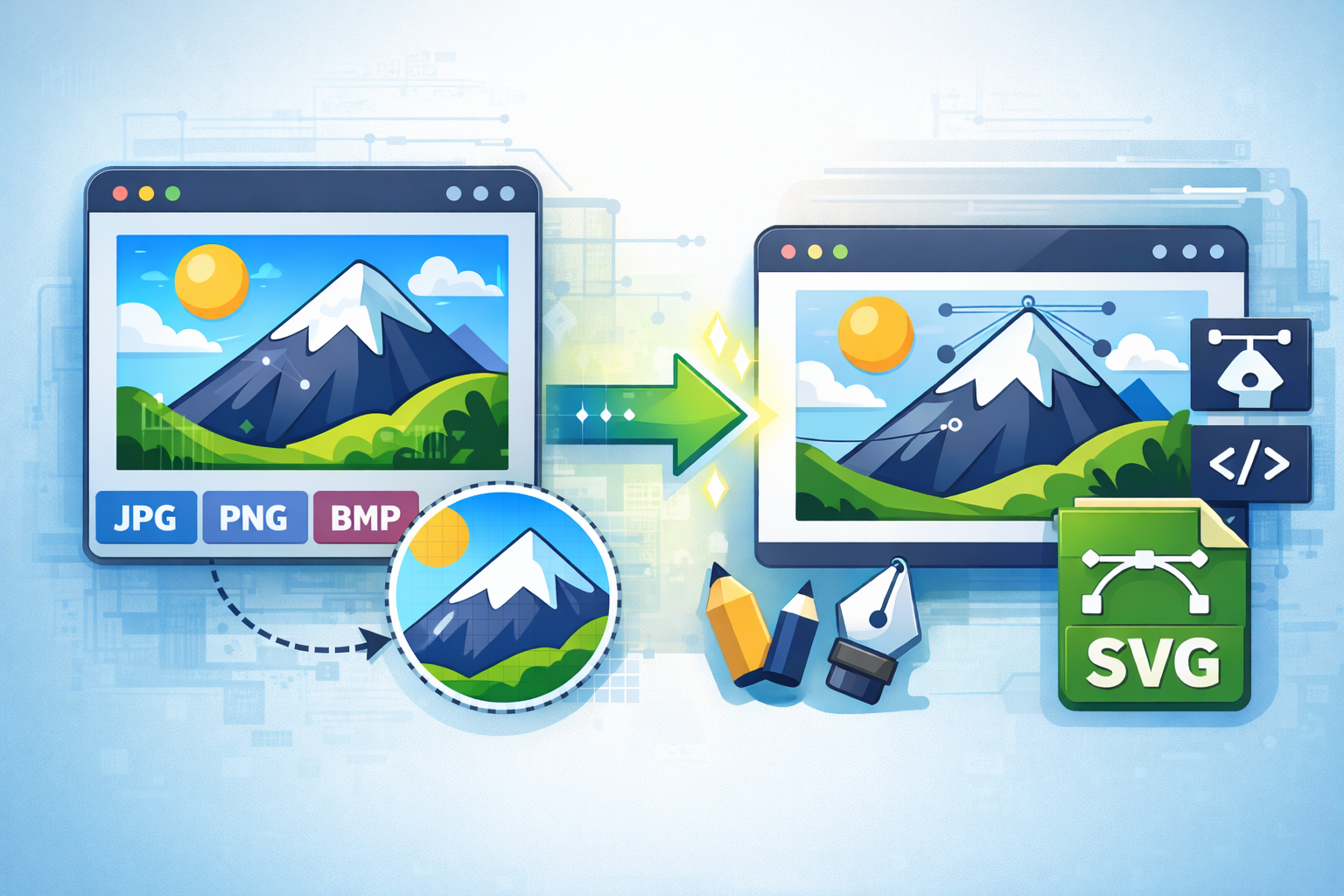
Images appear everywhere on the web. From blogs and websites to social media and even presentations images are a great way to communicate ideas more quickly than words. But, not all image formats function the identical way. Sometimes, you have to convert one file type into another format to reduce the size of the file, enhance compatibility, or to optimize for web pages.
This simple guide to changing the Types of Images will help you understand all you need to know about. You’ll discover why image conversion is crucial, the most commonly used formats for files, the most effective tools to use, as well as errors to avoid. In the end you’ll be able to convert images quickly and easily.
Understanding Image File Types
Before you can convert images, it is essential to be aware of the most commonly used images file types and the way they function.
JPEG (JPG)
JPEG is among the most popular image formats. It compresses images in order to reduce the size of files, while preserving good quality.
Ideal for:
- Photographs
- Images from the website
- Social media
Pros
- Small size file
- Widely loved and
Cons
- The quality decreases when editing is repeated
PNG
PNG files can be transparent and provide high quality images.
The best choice for:
- Logos
- Graphics
- Transparent backgrounds
Pros
- Compression that is lossless
- Transparency is a key component of the support for Transparency.
Cons
- Larger file sizes
GIF
GIF images are animated and are frequently employed in memes and short loops.
The best choice for:
- Simple animations
- Icons
- Short graphics
Cons
- Limited color range
WEBP
WEBP is a new format designed by Google that has great compression.
The best choice for:
- Websites
- Pages that load quickly
Pros
- Smaller file sizes
- High-end
Cons
- Not supported by some of the older software
SVG
The SVG file format is a vector image that be scaled infinitely, without losing quality.
The best choice for:
- Icons
- Logos
- Illustrations
Why You Might Need to Change Image File Types
There are a variety of reasons conversion of images is required.
1. Website Performance
Large images slow down websites. Converting images into optimized formats such as WEBP as well as compressed JPG will dramatically increase loading speeds.
2. Compatibility
Certain platforms only support specific file formats. For instance most web-based platforms use JPG as well as PNG.
3. Transparency Needs
If you want transparent backgrounds, then converting them to PNG is generally required.
4. File Size Reduction
Images with high resolution can be massive. Changes in file formats can decrease upload time and storage requirements.
5. Editing Requirements
Some image editing software works best with specific formats.
Best Tools for Changing Image File Types
we explore the fascinating world of the mind—breaking down psychology concepts into simple are a few that are among the best tools that you are able to use.
1. Online Image Converters
Online tools are fast and don’t require any installation.
Some of the most popular choices are:
- CloudConvert
- Convertio
- TinyPNG
Advantages
- Easy to use
- No downloads needed
Disadvantages
- Internet connection is required.
- Limits on file size
2. Built-in Computer Tools
Your computer already includes software that converts images.
Windows
- Microsoft Paint
- Photos app
Mac
- Preview
These programs allow you to open an image and then export the image in another format.
3. Professional Editing Software
Professional tools provide greater control over compression and quality.
Examples include:
- Adobe Photoshop
- GIMP
- Affinity Photo
The programs support batch processing as well as more advanced settings for export.
4. Mobile Apps
Smartphones also provide an easy way to change images.
The most popular apps are:
- Image Converter
- Photo & Picture Resizer
- Adobe Express
Step-by-Step: How to Change Image File Types
and building healthy habits is a straightforward procedure that you can follow.
Step 1: Choose Your Tool
Choose an online conversion tool, desktop program or a mobile application.
Step 2: Upload or Open the Image
Open the image you wish to convert.
Step 3: Select the Output Format
Select the format you would like to use, like:
- JPG
- PNG
- WEBP
- GIF
Step 4: Adjust Settings
Certain tools let you alter:
- Image quality
- Compression level
- Image size
Step 5: Export or Download
Save the converted file on your device.
How Image Conversion Affects Quality
Image conversion can affect image quality based on image format.
Lossy Compression
Formats such as JPG remove certain data in order to reduce the size of files. This could reduce the quality of files.
Lossless Compression
PNG and a handful of WEBP files preserve high-quality images.
TIP: Always keep the original image file prior to converting.
Best Image Formats for Different Uses
| Purpose | Recommended Format |
|---|---|
| Photography | JPG |
| Logos | PNG or SVG |
| Images from the website | WEBP |
| Animations | GIF |
| High-quality graphics | PNG |
SEO Benefits of Optimizing Image File Types
Modifying the type of image files could improve the performance of search engines.
Faster Page Speed
Search engines favor websites that load quickly. Optimized images can speed up loading times.
Better User Experience
Smaller images load quickly, ensuring that visitors are entertained.
Improved Mobile Performance
Mobile users greatly benefit from images compressed.
For more information on the best practices for optimizing images You can look into Google’s guidelines for image optimization:
https://developers.google.com/search/docs/appearance/google-images
Common Mistakes When Changing Image File Types
Avoid these common mistakes.
1. Converting Too Many Times
Repeated conversions reduce quality.
2. Using the Wrong Format
For example, use JPG to create transparent graphics.
3. Ignoring Compression Settings
High compression may damage image quality.
4. Not Keeping the Original File
Always keep the original copy in case you require it in the future.
Tips for Maintaining Image Quality
Use these suggestions when you convert images. Follow these tips when converting.
- Begin by using the highest resolution that you can.
- Do not save and edit multiple times.
- Make use of lossless formats when the quality is important.
- Make sure you adjust compression properly
- Use trusted conversion tools
Advanced Techniques for Bulk Image Conversion
If you are managing a large number of photographs, batch processing will save time.
Batch Conversion Tools
Software like Photoshop or GIMP permit you to convert a large number of images in one go.
Automation Tools
Developers typically utilize plugins or scripts to automatize conversions.
Content Management Systems
Platforms such as WordPress can convert automatically uploaded images to optimized formats.
Security Considerations When Using Online Converters
While online converters can be useful however, you should be aware of sensitive images.
Tips for safety:
- Make sure to use trusted websites
- Avoid uploading private images
- Check privacy policies
- Delete files after download if possible
Future of Image File Formats
New imaging technologies continue to increase effectiveness.
Formats that are emerging include:
- AVIF
- JPEG XL
These formats offer smaller sizes and better quality, which makes them perfect for websites that are modern.
FAQs About Simple Guide to Changing Image File Types
1. What is the most efficient method of changing the types of images in a file?
Making use of using an online converter generally the easiest way. Upload your photo, choose the format, then download the file converted.
2. Does converting images reduce quality?
It’s all about the format. Formats that are lossy like JPG can lower quality, whereas PNG maintains the full quality.
3. How can I make images convert using software?
Yes. Numerous free online tools let users to convert images without needing to install any program.
4. What format of image is the best for web sites?
WEBP is typically the best choice since it offers excellent quality even with smaller size files.
5. Does PNG have more value than JPG?
PNG is more suitable in terms of transparency and graphics, while JPG is ideal for photography.
6. Can I transform multiple images at one time?
Yes. A lot of tools can batch convert that allows you to alter formats of multiple images at the same time.
Conclusion
Converting images formats is a crucial digital ability. If you’re running a website or designing images, or just sharing images, selecting the right format for your images makes significant differences in quality as well as compatibility and performance.
This Easy Guide to Changing the Type of Image Files provided you with the most commonly used formats tools, methods, and tools to convert images efficiently. When you select the right format for the intended use and staying clear of common mistakes it is possible to ensure that your images appear stunning and load fast across all devices.
By using the tools and techniques included in this guide changing the types of images is a straightforward and effective procedure that anyone is able to learn to master.