
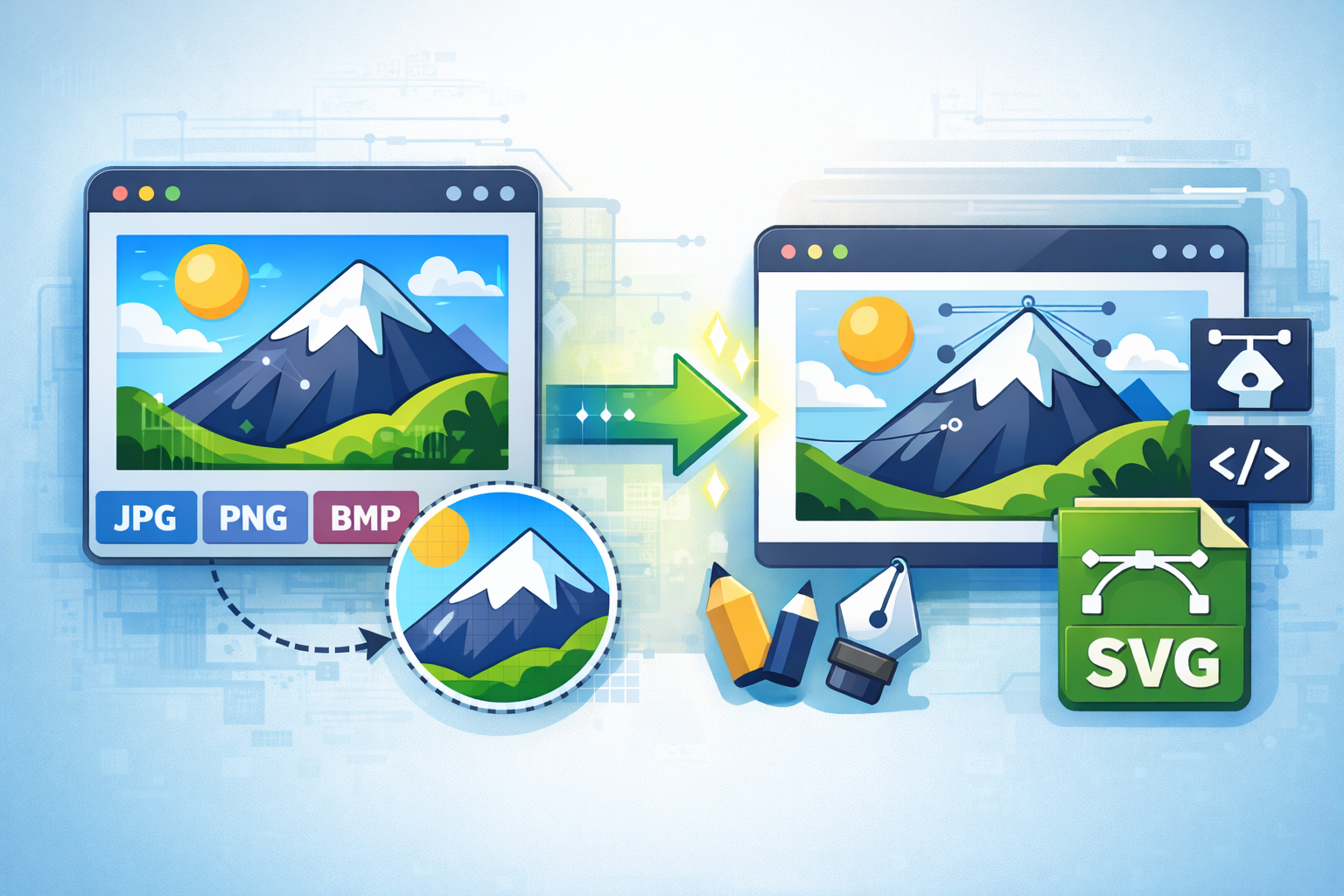
Introduction: Why Understanding Image Formats Matters
If you produce web-based content, design images, manage websites or are involved in photography learning how to work with different formats of images is a crucial ability. Each format is used for various purposes selecting the wrong format could cause low quality, large files or issues with compatibility.
Take a look A photographer may prefer RAW or TIFF to edit their images, whereas web developers usually choose JPEG, PNG, or WebP to load pages faster. Social media developers might rely on compressed formats in order to keep uploads quick without losing quality.
Understanding these formats will help you:
- Increase the speed of your website
- Maintain image quality
- Reduce storage use
- Make sure that the application is compatible with all platforms
- Improve the user experience
Today, digital images are everywhere, from apps and websites to presentations and even advertisements. Making sure you use the right format will ensure that your images appear sharp and professional.
This guide will take the reader through all you should be aware of, from the major image formats, the best times to use them, the most effective tools, common errors, and tips for simplifying your work.
When you’re done reading this post, you’ll be able to comprehend how to work with various Image Formats and select the appropriate design for your project.
Understanding Image Formats
Before you begin exploring tools and tricks it’s essential to understand the definition of what an image format is.
The Image format is a method to keep and organize digital images. Each format has its own methods of compression along with color support, as well as storage techniques for data.
There are two broad categories:
1. Raster Image Formats
Raster images consist of pixels. These formats are resolution-dependent, meaning they lose quality when enlarged.
The most common raster formats are:
- JPEG
- PNG
- GIF
- TIFF
- WebP
- BMP
Images from raster images are frequently employed in:
- Photography
- Images from social media
- Graphics for websites
- Digital artwork
2. Vector Image Formats
Vector images employ mathematical equations rather than pixels. They can therefore be scaled infinitely with no loss of quality.
Vector formats that are popular include:
- SVG
- AI
- EPS
Vector graphics are often employed for:
- Logos
- Icons
- Illustrations
- Print graphics
Understanding the distinction will be the initial step to understanding how to work with different image formats easily.
Common Image Formats and Their Uses
JPEG (JPG)
JPEG is among the commonly used image format available on the internet.
Ideal for:
- Photographs
- Images from social media
- Images from the website
Advantages
- Small size files
- Photos of good quality and high resolution
- All supported
Disadvantages
- Lossy compression reduces quality
- Not the best choice for images that have transparency
PNG
PNG is the most popular image format for those which require transparency.
Ideal for:
- Logos
- Icons
- Graphics for the UI
Advantages
- Compression that is lossless
- Supports transparent backgrounds
- High-end
Disadvantages
- A larger file size is available than JPEG
GIF
GIF files are typically employed for simple animations.
Ideal for:
- Animations of short duration
- Memes
- Stickers
Advantages
- Animation Support
- Small size to fit simple graphics
Disadvantages
- Limited to 256 colors
SVG
SVG is a vector format widely used to design web pages.
Ideal for:
- Logos
- Icons
- Illustrations
Advantages
- Infinite scalability
- Small size file
- Editable using code
Disadvantages
- Not the best for photos.
WebP
WebP is a new format that was developed by Google.
Ideal for:
- Websites
- Online graphics
Advantages
- Less large file sizes that JPEG and PNG
- Helps to promote Transparency
- Animation support
Disadvantages
- Older software may not be compatible with it.
TIFF
TIFF is a premium format commonly used in professional photography.
Ideal for:
- Printing
- Professional editing
Advantages
- Highest quality and extremely high standards
- Compression that is lossless
Disadvantages
- Very huge file sizes
Choosing the Right Format for Your Needs
The format you choose to use will depend on your goals.
| Purpose | Recommended Format |
|---|---|
| Photography | JPEG |
| Transparent graphics | PNG |
| Images animated | GIF |
| Logos & icons | SVG |
| Web performance | WebP |
| Professional printing | TIFF |
A simple rule:
- Photos – JPEG
- Graphics – PNG
- Logos – SVG
- Web optimization WebP
By following these tips, you can how to work with various image formats significantly easier.
Best Tools for Handling Image Formats
The proper tools can make managing images easy.
Adobe Photoshop
Ideal for editing professional or format change.
Features:
- Advanced editing tools
- Multiple formats of export options for export
- Layer management
Official website:
https://www.adobe.com/products/photoshop.html
GIMP
An open source and free Alternative to Photoshop.
Features:
- Tools for editing that are powerful
- Multiple export formats
- Support for plugins
Canva
Excellent for novices and creators of social media.
Features:
- Drag-and-drop design
- Export options are easy to export.
- Cloud-based editing
Online Image Converters
This is handy when you require fast conversions.
Some of the most popular choices are:
- CloudConvert
- Convertio
- TinyPNG
These tools allow you to convert between formats such as PNG, JPG, WebP and more in just a few just a few seconds.
Simple Workflow to Manage Image Formats
This workflow will make it easier to manage the handling of images:
- Beginning with the best quality format
- TIFF or TIFF for photography
- Edit with professional software
- Photoshop or GIMP
- export based on the purpose
- Web – WebP/JPEG
- Graphics – PNG
- Logos – SVG
- Optimized to improve performance
- Compress images to speed up loading
- Check compatibility
- Make sure that images display properly across devices
This process eliminates confusion and simplifies how to work with Different Formats of Images easily part of your daily routine.
Common Mistakes When Working With Image Formats
Avoid these common blunders
Using PNG for Photos
PNG files are more than JPEGs, and they can slow websites.
Overcompressing JPEG Images
A lot of compression can result in blurred or pixelated images.
Ignoring Image Optimization
Large images can increase loading times.
Using Raster Logos
The logo should use vector (SVG) to ensure sharpness.
Not Considering Compatibility
Certain older systems might not be able to support the latest formats, such as WebP.
By avoiding these mistakes, you can maintain the quality and efficiency.
Tips to Optimize Image Files
and building healthy habits are some practical suggestions:
- Resize images prior to uploading
- Make use of compression tools such as TinyPNG
- Use WebP for the most modern sites
- Make sure the resolution is appropriate for the platform.
- Beware of metadata that is not needed.
These simple steps significantly boost effectiveness.
Future Trends in Image Formats
Image technology continues to evolve.
Formats that are emerging include:
AVIF
AVIF has a higher compression than WebP, and has better quality.
HEIF
It is widely used in smartphones, and especially Apple devices.
AI-based compression
New tools make use of AI to reduce images, while still preserving the quality.
Keeping abreast of the latest technology keeps professionals at the forefront of their field.
Frequently Asked Questions
1. What is the most efficient method of converting image formats?
Online converters such as CloudConvert or other tools such as Photoshop facilitate rapid conversion between formats like JPG, PNG, and WebP.
2. Which format is best for websites?
WebP is usually the best option since it has smaller file sizes and still maintains excellent quality.
3. Is PNG better than JPEG?
It’s based on the intended use. PNG is best for transparency and graphics while JPEG is ideal for photography.
4. Can SVG images be used for photos?
No. SVG is a vector format, and is best for logos, icons and illustrations.
5. Why are TIFF files so large?
TIFF files are high-quality image data that has no or little compression, which makes them perfect for professional editing, however they are huge in dimensions.
6. How do I reduce image size without losing quality?
Utilize the compression software, then convert them to WebP and then alter images to meet the exact dimensions required.
Conclusion
Knowing the best way to work with Different Formats of Images will drastically improve the way you work with digital images. If you’re creating web pages, creating graphics, or editing images selecting the appropriate format will ensure the highest quality as well as performance and compatibility.
Keep in mind the main rules:
- Make use of JPEG for your photos.
- Select PNG to ensure transparency.
- Make use of SVG for graphics that are scalable
- Optimize websites using WebP
- Make use of TIFF for editing professionally
When you combine the correct design with the appropriate equipment and process, you’ll produce more appealing images while reducing storage and time.
The simple techniques you learn will ensure your photos look professional on every platform.