
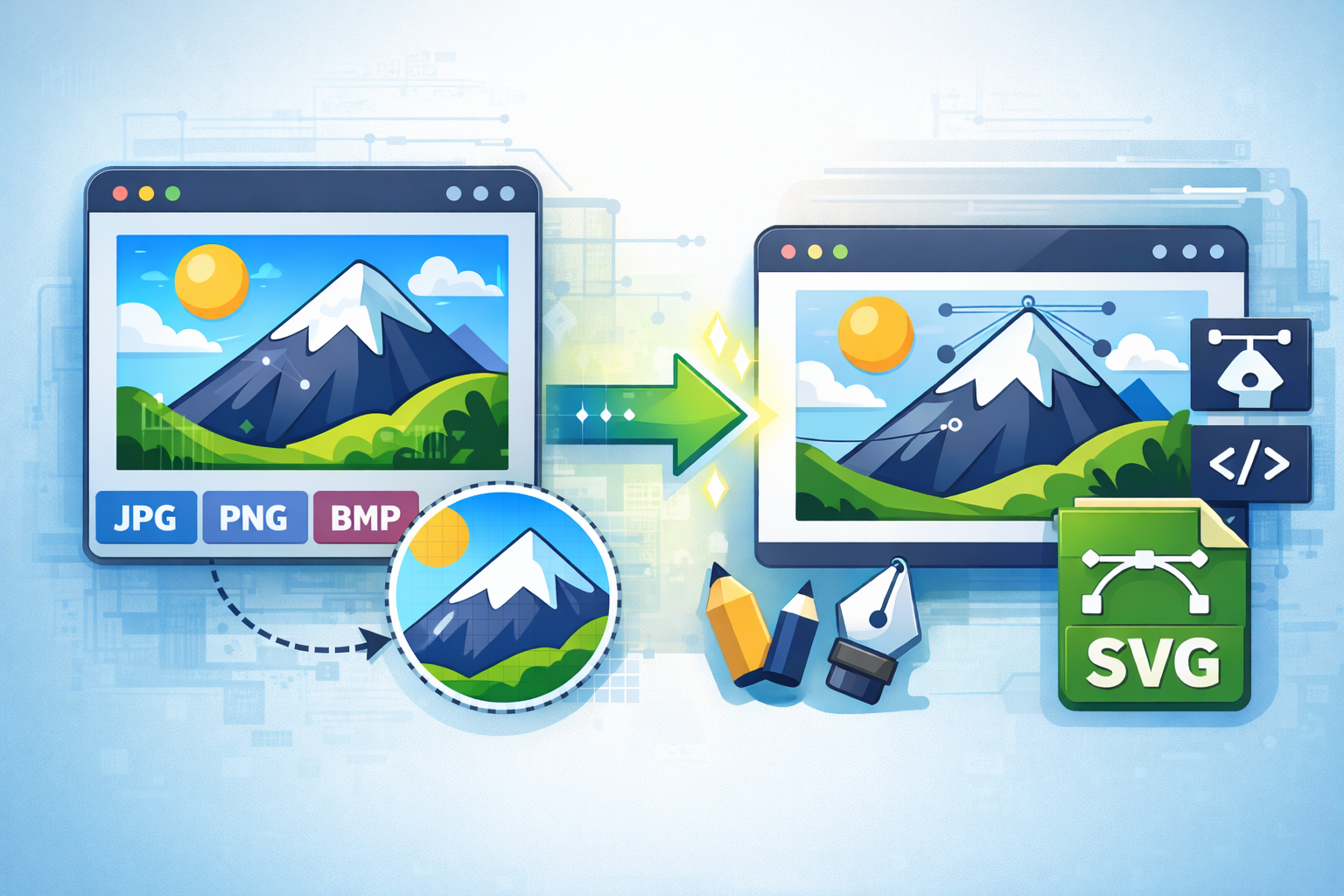
Introduction to Beginner’s Guide to Editing and Converting Images
Images appear everywhere on the web. From social media sites and websites through blogs to marketing material images help convey ideas more quickly than words alone. This is why this Beginning’s Guide for editing and converting images is a crucial ability.
If you’re managing a website or creating social media posts or just looking to improve your personal photos, knowing what you can do to alter and transform images is a significant step. Editing improves the quality as well as adjust colors, fix imperfections, and also resize images. Converting lets you change the file format so that images function perfectly across platforms, devices and programs.
For novices, editing images might seem a bit difficult. There are numerous tools as well as formats and methods accessible. But once you grasp the basics, the procedure is easy and fun.
In this book you’ll be able to learn everything from the most common formats for images and editing tools, to practical techniques, pitfalls to avoid, and the answers for frequently posed questions.
Understanding Image Editing Basics
Image editing is the process of altering or improving the quality of an image. This could be simple adjustments, or more sophisticated modifications.
Common Image Editing Tasks
The most popular editing tasks are:
- The process of cropping – eliminating unnecessary portions of an image
- Resizing – changing image dimensions
- Adjusting brightness and contrast
- Color correction
- Background removal
- The ability to add graphics or text
Simple edits can greatly enhance the appearance and appearance.
Why Image Editing Matters
Editing images helps you:
- Improve visual quality
- Keep the brand’s Consistency
- Optimize images for website
- Create professional-looking visuals
- Reduce the size of files for faster loading
High-quality images can also improve trust and engagement online.
What Is Image Conversion?
Image conversion refers to the process of changing an image from one format to another format.
Different platforms require different formats. For instance, websites typically utilize compressed formats to increase loading speeds.
Reasons to Convert Images
It is possible to convert images for a variety of reasons:
- Reduce the size of your file
- For compatibility to the software
- To improve image quality
- To meet platform requirements
- For optimizing photos for the web or print
Conversion tools let you modify formats fast and efficiently without sacrificing quality.
Common Image File Formats
Understanding the various formats of images is a crucial element of Beginning’s Guide for editing and configuring images.
| Format | Best Use | Advantages |
|---|---|---|
| JPEG | Photography | Small size file |
| PNG | Transparency, graphics | High-end |
| GIF | Simple animations | Lightweight |
| WebP | Websites | High compression |
| TIFF | Professional printing | Very high-quality |
| BMP | Windows systems | Uncompressed |
Selecting the appropriate format is dependent on the way in which the image will be employed.
Essential Tools for Image Editing
There are a variety of tools available to edit images, including beginner-friendly applications to advanced software.
1. Adobe Photoshop
The most effective editing tool. It has advanced features, such as layer editing, masking and Retouching.
2. Canva
Ideal for those who are just beginning. Canva facilitates easy editing templates, quick designs for social media.
3. GIMP
An open source alternative that is free and available for Photoshop which has capable editing features.
4. Pixlr
A browser-based editor is perfect for editing quickly without having to download any software.
5. Fotor
A second tool for beginners that offers basic image enhancement capabilities.
It is also possible to explore online tools for conversion, such as CloudConvert:
https://cloudconvert.com
Step-by-Step Image Editing Process
Step 1: Choose the Right Image
Begin with the highest quality image you can get. High-quality images yield more effective editing outcomes.
Step 2: Crop and Resize
Remove the unwanted elements and adjust the dimensions of your image to fit the design.
Step 3: Adjust Brightness and Contrast
The balance of lighting can enhance the aesthetic appeal of your photograph.
Step 4: Correct Colors
The color correction will ensure that the image appears natural and uniform.
Step 5: Apply Filters Carefully
Filters can enhance photos However, too many effects can degrade professionalism.
How to Convert Images Easily
Image conversion is possible in a couple of simple steps.
Method 1: Using Online Tools
Steps:
- Upload your photo
- Choose the format you want to use.
- Click to convert
- Download the file that has been converted
Method 2: Using Editing Software
Most editing tools support conversion while saving images.
Steps:
- Open the image
- Click Save As
- Select a different file format
- Save the file
Optimizing Images for Websites
Large images can cause slowdowns in loading times on websites.
Best Optimization Practices
- Convert images prior to uploading
- Make use of WebP format when it is possible.
- Resize images according to the dimensions required
- Beware of extremely large file sizes
Faster websites can improve the user experience and improve SEO performance.
Best Image Sizes for Different Platforms
| Platform | Recommended Size |
|---|---|
| 1080 x 1080 | |
| Facebook Post | 1200 x 630 |
| YouTube Thumbnail | 1280 x 720 |
| Website Blog Image | 1200 x 800 |
The correct size ensures that images look professional and clear.
Common Mistakes Beginners Make
When they are learning about the Beginning’s Guide for editing and converting images novices often make the following mistakes:
1. Over-Editing Images
A lot of filters or adjustments can cause images to look strange.
2. Ignoring Image Resolution
Images with low resolution blur when they are resized.
3. Using the Wrong Format
For instance, you can use JPEG to create images that require transparency.
4. Uploading Large Images
Large images can slow web performance.
5. Not Keeping Original Files
Always keep the original copy in case any edits have to be reversed.
Tips for Professional-Looking Images
Use these suggestions to enhance your editing abilities:
- Utilize natural light when you can.
- Maintain the same color tone
- Simple designs and clean
- Make use of high-quality images
- Learn basic composition techniques
It is important to practice before mastering the art of image editing.
Benefits of Learning Image Editing
Understanding the Beginner’s Guide for Editing and Converting Images provides several benefits:
- Better social media content
- New website design and visuals
- Marketing materials that are enhanced
- Professional branding
- Flexible and creative
These skills are beneficial for marketers, bloggers designers, bloggers, and business owners.
Advanced Techniques to Explore Later
Once you have mastered the fundamentals after which you are able to explore further advanced methods:
- Retouching images
- Background replacement
- Layer masking
- HDR editing
- Processing images in batch
These techniques allow for more advanced visuals.
Future Trends in Image Editing
The technology for editing images continues to develop. There are several emerging trends that include:
- AI-powered editing tools
- Automatic background removal
- Smart image compression
- Real-time photo enhancement
This technology allows editing to be easier and more efficient than ever before.
FAQs – Beginner’s Guide to Editing and Converting Images
1. What is the best image editing tool that beginners can use?
Canva along with Pixlr are excellent choices for those who are new to the world of digital design because they have simple interfaces as well as simple editing tools.
2. What format is ideal for images for websites?
WebP is usually the most popular format since it provides superior quality and smaller size files.
3. Does converting images reduce quality?
It’s dependent what format you choose. Converting to high-quality formats from compressed formats like JPEG could reduce the quality a bit.
4. Can I edit images with my smartphone?
Yes. Numerous apps such as Snapseed, Canva, and Lightroom let you edit photos on the go.
5. How can you tell the differences of JPEG or PNG?
JPEG is a better choice for photos that have smaller file sizes while PNG allows transparency and better quality graphics.
6. Are image editing tools that are free sufficient?
Yes. A lot of free programs like GIMP, Canva, and Pixlr offer excellent editing tools appropriate for a majority of users.
Conclusion
The Beginner’s guide to editing and converting images is a crucial knowledge in today’s world of digital. When you’re making content for your website or marketing campaigns, social media or personal projects, editing and converting images will allow you to create visually appealing images.
Through understanding the formats of images and using the appropriate tools, and adhering to the best techniques, beginners can swiftly improve their skills in image editing. Start by making simple adjustments like cropping, resizing and color correction. You can then move on to advanced techniques as your confidence increases.
If you follow the correct method and consistent practice, anyone can master the art of image editing and produce stunning images that draw attention and communicate concepts effectively.