
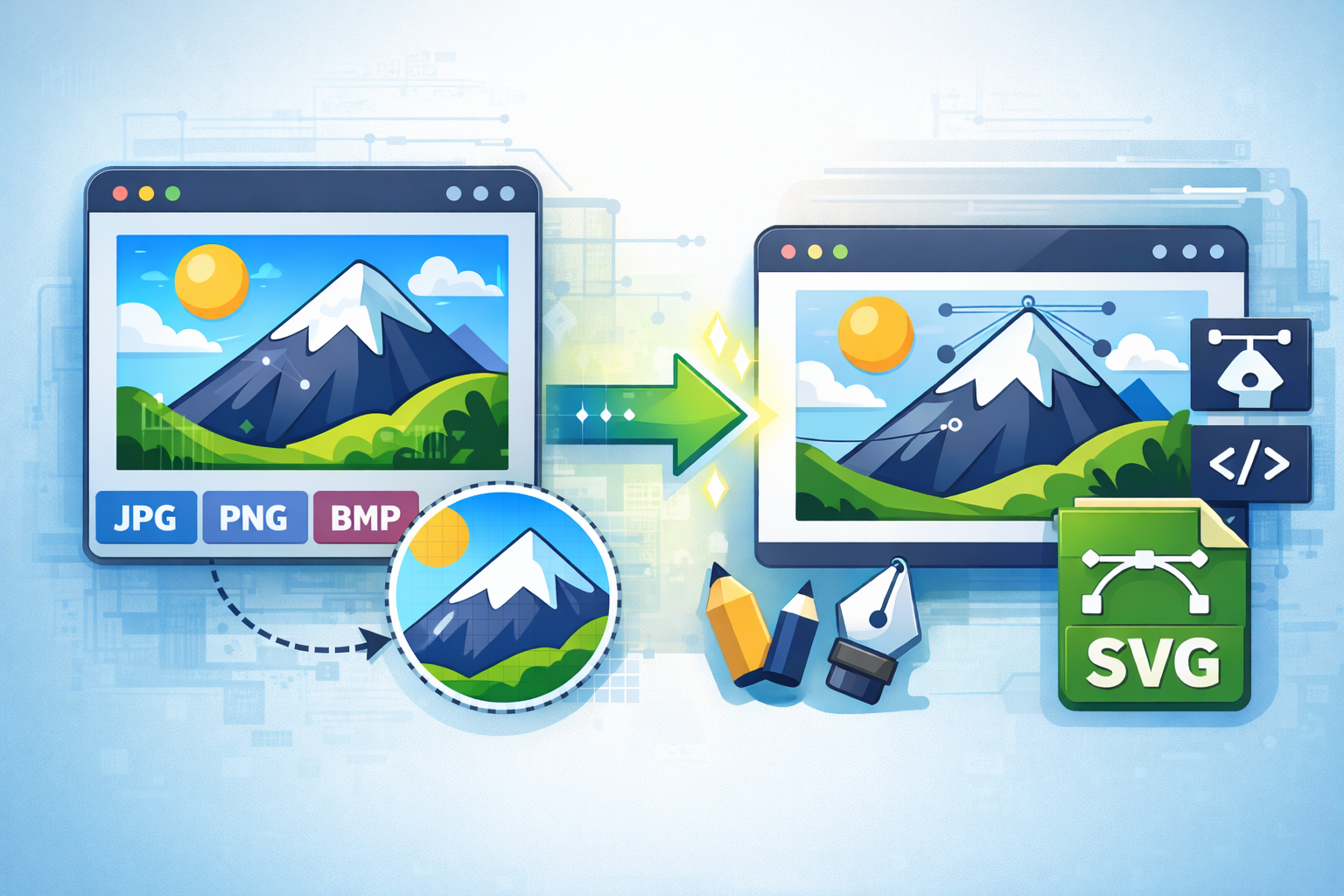
Introduction to Image File Conversion
Images are everywhere, from social media and websites as well as mobile applications and online marketing. However, they don’t all are available in exactly the same formats. Sometimes, an image has to be converted to a different format in order to increase compatibility and reduce file size or improve quality. That’s why A Quick guide to Images File Conversion is necessary.
The conversion of an image file is the procedure of changing an image from one format to another format. For instance, changing the PNG image to JPEG or converting the TIFF image to WebP. This can have a significant impact on the speed of loading as well as storage requirements and the quality of images.
Knowing when and how to convert images can help bloggers, designers, business owners and everyone else ensure greater digital efficiency. An image that is properly converted can help a website load quicker, boost SEO performance, and also ensure that images display correctly on various devices.
What Is Image File Conversion
Image file conversion is the process of the transformation of an image file one format to another, and preserving its visual information. For instance, you might convert:
-
PNG – JPEG
-
JPEG – WebP
-
TIFF – PNG
The reason for conversion usually involves reducing the size of files and enabling transparency, increasing compatibility with other images, or enhancing them for use on the internet.
The different formats for images differ in how they are compressed and stored information. Some focus on quality, whereas others concentrate on reducing size of files.
Why Image Formats Matter
The design of an image is a determinant for several crucial aspects:
1. File Size Different formats use different compression methods. Files that are smaller load faster and use less space.
2. Image Quality Certain formats can preserve more details than others.
3. Transparency Support formats like PNG have transparent backgrounds, however, JPEG does not.
4. Compatibility Certain software or platforms might require certain formats.
Selecting the correct format will ensure that your images function effectively within the intended setting.
Common Image File Formats Explained
JPEG Format
JPEG (Joint Photographic Experts Group) is among the most commonly used image formats.
Key characteristics:
-
Lossy compression
-
Small file sizes
-
Great for photography
-
Widely backed
JPEG is ideal for digital images where a slight quality loss is acceptable.
PNG Format
The PNG (Portable Network Graphics) is well-known for its graphics and design elements.
The most important features are:
-
Compression that is lossless
-
Helps to promote Transparency
-
Better quality than JPEG
-
Larger file sizes
PNG is widely used for icons, logos as well as images that require transparent backgrounds.
GIF Format
GIF files are renowned for their support of simple animations.
Main features:
-
Limited to 256 colors
-
Animation support
-
Small size file
GIFs are typically used for memes, short animations as well as simple graphics.
WebP Format
WebP is an image format that has been modernized. format that was designed to optimize web pages.
Advantages are:
-
File sizes smaller are smaller than JPEG and PNG
-
High-quality compression
-
Transparency is a key component of the support for transparency
-
Faster website loading
Google developed WebP to improve website performance.
TIFF and BMP Formats
These formats are frequently employed in professional settings.
TIFF
-
High quality image quality
-
Large file sizes
-
It is used in printing and photography.
BMP
-
Uncompressed format
-
Very large files
-
Most often, they are used in older systems
Why You Might Need Image File Conversion
Image conversion can solve a variety of real-world digital challenges.
Website Optimization
Large images can slow websites. Converting images to more efficient formats such as WebP will significantly increase speed on pages.
According to Google’s recommendations for web performance Optimized images are essential to speed up loading websites.
Learn more about image optimization from
https://developers.google.com/speed/docs/insights/OptimizeImages
Compatibility Between Devices
Different devices and programs are compatible with various formats.
For instance:
-
Some websites prefer WebP
-
Print designs require TIFF
-
Social media usually prefers JPEG
Conversion ensures compatibility.
Storage Management
Images with high resolution can take up large amounts of space. Converting images into compressed formats can reduce storage requirements but doesn’t significantly affect the quality.
Best Tools for Image File Conversion
There are a variety of tools available to convert images quickly and effectively.
Online Image Converters
Online tools are easy to use because they do not require any installation.
Some of the most popular choices are:
-
CloudConvert
-
Convertio
-
Online-Convert
Advantages:
-
Easy to use
-
Accessible from anywhere
-
No software is needed
Desktop Image Conversion Software
Professional software provides greater control.
Common choices are:
-
Adobe Photoshop
-
GIMP
-
XnConvert
Benefits:
-
Processing in batches
-
Advanced editing
-
Higher output of high-quality
Mobile Apps for Image Conversion
Mobile apps let you convert images directly from smartphones.
Examples include:
-
Image Converter (Android)
-
File Converter apps
-
Photo editing applications
These apps can be useful to edit quickly and for social media planning.
Step-by-Step Process for Image File Conversion
Simple workflows ensure efficient conversion.
Step 1: Choose the Right Format
Choose the best design based on your goals.
| Purpose | Best Format |
|---|---|
| Web images | WebP |
| Photographs | JPEG |
| Transparent graphics | PNG |
| Printing | TIFF |
Step 2: Use an Online Converter
-
Upload your photo
-
Select the desired format
-
Adjust the quality settings
-
Download the file that has been converted
This method is great for tasks that require quick attention.
Step 3: Use Editing Software
To achieve higher quality results:
-
Open the image in the software
-
Select Save As
-
Choose a new format
-
Adjust compression settings
-
Export the file
This allows for greater control over the quality and size.
Image File Conversion for SEO
Image optimization plays a crucial aspect in the search engine optimization.
Page Speed Optimization
Search engines favor websites that load quickly.
Smaller image files improve:
-
Page loading time
-
User experience
-
Rankings of search results
Image Compression Techniques
Two main types of compression exist:
Lossy Compression
-
Reduces the size of files dramatically
-
A slight loss in quality
-
Used by JPEG
Lossless Compression
-
Preserves image quality
-
Larger file sizes
-
Used by PNG
The balance between compression and quality is crucial.
Common Mistakes in Image File Conversion
Even the simplest conversions could cause problems if they are done wrong.
Losing Image Quality
The excessive compression can cause:
-
Images in a blur
-
Pixelation
-
Color distortion
Always test different compression levels.
Choosing the Wrong Format
Utilizing PNG for photos can inadvertently increase the size of files and using JPEG to create logos could diminish clarity.
Choosing the right format is vital.
Ignoring Metadata
Image metadata can contain useful information like:
-
Copyright
-
Keywords
-
Camera settings
The removal of metadata could reduce the useful images for professionals.
Advanced Tips for High-Quality Conversions
Batch Conversion
Batch conversion allows several pictures to be converted simultaneously.
Benefits include:
-
It saves time
-
Maintains consistency
-
Enhances efficiency of workflow
A variety of tools are compatible with this feature.
Maintaining Resolution
Resolution determines image clarity.
To avoid loss of quality:
-
Maintain resolution in the original format whenever possible.
-
Avoid repeat conversions
-
Make use of quality source files
Automating Image Optimization
Automation tools are able to automatically compress and convert images before uploading images to websites or content management systems.
Benefits include:
-
Faster workflows
-
Consistent image quality
-
Reducing manual effort
Frequently Asked Questions
1. What is an image file conversion?
The conversion of an image file is the process of changing images to a different type of format (such like PNG) into a different type of format (such such as JPEG as well as WebP).
2. Can converting an image decrease the quality?
It is possible. Lossy formats such as JPEG could reduce quality a bit however lossless formats such PNG retain the their original quality.
3. What format of image is ideal for web pages?
WebP is usually the best option because it has high-quality with smaller size files.
4. Do I have the ability to convert pictures using software?
Yes. A lot of online converters permit image conversion straight from an internet browser.
5. Is PNG superior to JPEG?
It is dependent on the usage situation. PNG is more suitable in terms of transparency and graphics while JPEG is more suitable for photos.
6. Can I convert multiple images at a time?
Yes. A lot of applications support batch conversion, which allows users to convert multiple images at the same time.
Conclusion
Understanding formats for images and techniques for conversion is vital to anyone who works in the field of digital image. If you’re optimising a website or preparing pictures for the social web or managing storage for digital media Image file conversion can keep images top-quality and efficient.
If they follow an easy guide to Converting Images Users can select the appropriate format, stay clear of common errors and make use of powerful tools to enhance the efficiency of their workflows. When optimized correctly the images will become smaller, quicker and more affixed to devices, improving user experience as well as online performance.